
Autumn and winter camino: pros, cons, best routes and tips for walking off-season
The autumn and winter Camino can be a completely different experience from walking in spring or summer. The busy paths become quieter, the landscapes change colour, the mornings are crisp, and the familiar Camino rhythm takes on a slower, more reflective feeling.
But walking the Camino outside the main season also comes with a few challenges. Shorter days, rain, cold temperatures, muddy trails and limited accommodation can make your journey more demanding than you might expect.
Does that mean you should avoid a fall or winter Camino? Absolutely not. In fact, if you enjoy peaceful trails, dramatic scenery and a little more solitude, these seasons might offer exactly the Camino experience you are looking for.
Here is what to expect, which routes are worth considering, and how to prepare for walking the Camino in autumn and winter.

Why walk the camino in autumn or winter?
Most people imagine the Camino under a bright blue sky, with long sunny days, lively albergues and plenty of fellow pilgrims along the way. But the Camino has another side, and it is worth discovering.
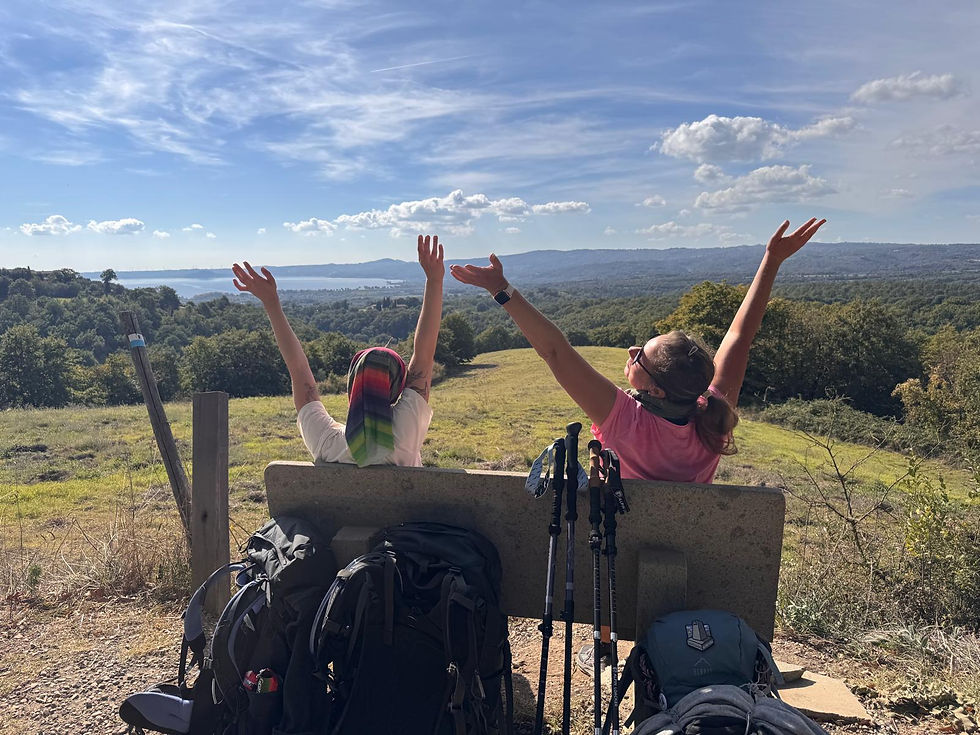
Autumn brings golden vineyards, chestnut forests, misty mornings and the smell of wet earth. Winter offers bare trees, dramatic skies, peaceful villages and a sense of stillness that is difficult to find during the busy season.
You may walk for hours without meeting another pilgrim. You might find yourself stopping more often to appreciate the landscape rather than rushing to reach the next destination. And when you finally arrive at a warm café or a cosy accommodation, that simple pleasure can feel like a reward in itself.
Of course, the quieter season is not for everyone. Let's look at both sides.
The pros of an autumn and winter camino
1. Fewer pilgrims and more peace
One of the biggest advantages of walking off-season is the reduced number of pilgrims. Popular routes such as the Camino Francés and Camino Portugués become much quieter after the summer rush.
You are less likely to find crowded albergues, busy cafés or long queues at popular attractions. You can walk at your own pace, enjoy the silence and spend more time with the people you meet along the way.
If you are an introvert or simply prefer a more personal Camino experience, this can be a wonderful time to walk.
2. Beautiful seasonal landscapes
Autumn transforms the camino scenery. Vineyards turn shades of red and gold, forests become colourful, and the countryside often looks especially beautiful after rainfall.
In Galicia, misty hills, moss-covered stone walls and green forests create an almost magical atmosphere. The landscape feels more intimate and atmospheric than it does during the dry summer months.
Winter has its own beauty. Bare branches, soft winter light, dramatic clouds and occasional frost give familiar places a completely different character.
3. More time for yourself
A quieter camino can give you more space to think, reflect and reconnect with yourself. Without the constant activity of a busy trail, you may find it easier to enjoy your own company. There is less pressure to keep up with other pilgrims, follow a social routine or arrive at an albergue early to secure a bed. You can make the journey your own.
4. Cooler walking temperatures
If you struggle with summer heat, autumn can be an excellent alternative. Walking in mild temperatures is often more comfortable than hiking under the strong summer sun. You may still encounter warm days, especially in September and early October, but the risk of extreme heat generally decreases as the season progresses.
5. A different kind of camino community
Although there are fewer pilgrims, the people you meet during the off-season may be looking for a similar experience: quieter trails, more independence and a different connection with the camino. You may find that conversations become longer and connections more meaningful. With fewer people around, you often have more opportunities to get to know fellow walkers.

The cons: what can make an off-season camino difficult?
The quieter atmosphere is wonderful, but there are practical challenges you should not underestimate.
1. Unpredictable weather
Rain, wind, cold temperatures and sudden weather changes are part of autumn and winter walking. Northern Spain, particularly Galicia, can be very wet. Even if the forecast looks promising, conditions can change quickly. You may experience several days of rain, slippery paths and muddy tracks. In winter, temperatures can drop considerably, especially in inland areas and at higher elevations.
2. Shorter days
This is one of the most important things to consider. In autumn and winter, daylight hours are limited. You have less time to complete a stage, take breaks and enjoy the surroundings. Starting late in the morning can become a problem, especially if you have a long distance to cover. Walking in darkness is not something you should plan as part of your normal routine.
3. Limited accommodation and services
Some albergues, cafés, restaurants and small shops close outside the main season, particularly in smaller villages. You cannot always assume that the accommodation you found online will be open when you arrive. Some places operate only from spring to autumn, while others close for maintenance or holidays. This can make daily planning more important than during the busy season.
Also I have to mention here the lack of heating at the albergues, especially in southern areas, which can be challenging in the evenings.
4. Fewer fellow pilgrims
For some people, this is a benefit. For others, it can feel lonely. If you enjoy the social side of the Camino, you might miss the spontaneous conversations, shared dinners and friendships that develop when the trails are full. Some days, you may walk alone for hours and find very few people at your accommodation.
5. More challenging trail conditions
Wet leaves, mud, puddles, slippery stones and strong winds can make some sections harder than they appear on a map. Mountain routes and exposed coastal paths can be particularly demanding in bad weather. A stage that feels easy in summer may require more concentration and time in winter.
Which camino routes are best for autumn?
Autumn is a wonderful season for several camino routes, particularly if you choose a route that offers a good balance between scenery, services and manageable weather.
One of the best choices for an autumn Camino. The Central Portuguese Way is a great option if you want a quieter experience without giving up all the conveniences of a well-established route.
Starting in Porto, you walk through towns, villages, vineyards, woodland and historic centres before reaching Galicia. The route has a good network of accommodation and services, although opening times should still be checked later in the season.
September and October are particularly attractive months. Temperatures are usually more comfortable than in summer, and the countryside can be beautiful after the first autumn rains.
Why choose it?
Generally milder conditions than many inland northern Spanish routes.
A well-established route with towns and services.
A good balance of nature, culture and social opportunities.
Suitable for pilgrims who want a quieter but not overly remote Camino.
Keep in mind: Rain becomes more frequent as autumn progresses, particularly in northern Portugal and Galicia.
Best for coastal scenery and a refreshing autumn atmosphere. If you love the sea, the Coastal Route is worth considering in early autumn. You will walk along beaches, wooden boardwalks, fishing villages and coastal towns. The Atlantic scenery can be spectacular, especially when the weather is dramatic.
September and early October are usually the most attractive periods. You may still enjoy some sunshine, while the summer crowds gradually disappear.
Why choose it?
Beautiful ocean views.
A relatively gentle profile on many stages.
Coastal towns and fishing villages.
A good option for those who enjoy walking near the sea.
Keep in mind: Strong winds, rain and rough coastal weather can make exposed sections uncomfortable. Some seaside businesses and seasonal accommodation may close after summer.
3. Camino Inglés
Best for a shorter autumn Camino. The Camino Inglés is a particularly interesting choice if you have limited time. Starting in Ferrol, the route is approximately 110–120 km, depending on the exact route and stage choices, and can be completed in around five to six walking days.
It offers peaceful countryside, forests, small villages and a wonderful sense of arriving in Galicia.
Why choose it?
Short enough for a one-week walking holiday.
Less crowded than the Camino Francés.
Beautiful Galician landscapes.
A good option for pilgrims who want to experience the camino without committing to several weeks.
Keep in mind: Galicia can be very rainy in autumn. Accommodation and restaurant options may be limited in smaller villages, so check availability before setting off.
Best for those who want the traditional camino experience. The Camino Francés is a year-round classic, but not every section is equally suitable for autumn and winter.
September and October are excellent months for many stages, especially across the Meseta and Galicia. The summer crowds begin to disappear, while many services are still operating.
The route from Sarria to Santiago is a popular shorter option, but it remains relatively busy compared with more remote routes.
Why choose it?
Excellent camino infrastructure on the main sections.
Plenty of accommodation choices during much of autumn.
Historic towns, villages and beautiful countryside.
A good chance of meeting other pilgrims.
Keep in mind: The mountain crossing from Saint-Jean-Pied-de-Port towards Roncesvalles can become dangerous in bad weather. In winter, the route through the Pyrenees may be closed or unsuitable due to snow and ice. Always check official route conditions and use the recommended alternative via Valcarlos when necessary.
Which camino routes are best in winter?
Winter requires more careful route selection. It is not simply a matter of choosing your favourite Camino and packing a warmer jacket. If you want to walk in December, January or February, consider routes with lower elevations, accessible towns and reliable accommodation.
My first choice for a winter Camino, with careful planning.
The Portuguese Way from Porto is one of the more practical options for winter walking. It generally avoids the high mountain crossings found on some other Camino routes, and you pass through towns where you have a better chance of finding open services.
The Central Route may be a more practical winter choice than the exposed Coastal Route, although both can be wet and windy.
Why choose it?
No major high-mountain crossing.
A reasonable network of towns and transport connections.
A route that can be shortened or adjusted if the weather turns bad.
A good option for experienced walkers who enjoy quiet trails.
Keep in mind: Winter rain can be persistent, and not all accommodation remains open. Confirm your overnight stops before starting each stage.
2. Camino Inglés
A good option for a short winter adventure. Because it is relatively short, the Camino Inglés can work well if you want to experience the winter camino without spending several weeks on the trail.
However, Galicia is one of the wetter parts of Spain, so expect rain, muddy paths and limited daylight.
Why choose it?
Shorter overall distance.
Beautiful woodland and rural scenery.
Fewer pilgrims.
Easier to fit into a limited holiday.
Keep in mind: Check accommodation and food options carefully, especially outside Ferrol and Santiago.
3. Camino de Finisterre and Muxía
For a peaceful and atmospheric winter experience. If you are already in Santiago or want a shorter walking adventure, the Camino to Finisterre and Muxía can be a beautiful option. The route takes you through Galician countryside towards the Atlantic coast. In winter, the ocean can be dramatic, the villages quiet and the landscapes wonderfully atmospheric.
Why choose it?
A natural continuation after reaching Santiago.
Beautiful coastal scenery.
A quieter experience outside the main season.
A strong sense of reflection and completion.
Keep in mind: Coastal weather can be severe. Strong winds, heavy rain and rough seas are possible. Check accommodation and transport options in advance, especially if you plan to return to Santiago by bus.
What about the Camino del Norte and Primitivo?
Both routes are spectacular, but I would be more cautious about recommending them for a winter Camino. The Camino del Norte has exposed coastal sections, steep climbs and frequent rain. The Camino Primitivo crosses mountainous terrain, where snow, ice and poor visibility can create serious difficulties.
They can be wonderful autumn choices for experienced hikers, particularly in September and early October, but winter conditions can make them considerably more demanding. If you are considering either route in winter, plan carefully, check weather and trail conditions daily, and be prepared to change your itinerary.
Consider other caminos too, outside of Spain
While Spain is the main country for caminos, and they have the original ones, nowaday almost every country in Europe has its own routes. If you plan to walk in autumn or winter, it can be useful to check these possibilities too, for example Italy is a really good choice. Via Francigena goes through the country, originally from Cantarbury to Rome, but they extended it to the south-east part of Italy, where the weather can be pretty good in the colder month too.

What to expect on an autumn or winter camino
Before setting off, it helps to adjust your expectations. The off-season camino has a different rhythm.
You may walk alone more often. There might be long stretches when you see no other pilgrims. Enjoy the silence, but make sure someone knows your plans.
Your daily routine may change. You may need to start earlier, finish earlier and plan your meals around the opening hours of cafés and restaurants.
You might need to book accommodation in advance. During the main season, you can often find a bed as you go. In winter, the opposite may be true: fewer places are open, so booking ahead can be essential.
Some days may be uncomfortable. There will probably be moments when your shoes are wet, your hands are cold and the rain seems endless. Having the right equipment makes a huge difference.
You may discover a more personal Camino. Without the crowds and constant social activity, you might experience the journey in a quieter and more introspective way.

Practical tips for walking the camino in autumn and winter
1. Choose your route carefully
Do not choose a route based only on its popularity or beautiful photographs. Consider elevation, exposure, accommodation, transport connections and the typical weather conditions for the season. For a first off-season camino, I would lean towards the Portuguese Way from Porto or a shorter Galician route rather than a high-mountain route.
2. Check accommodation before you go
This is probably the most important practical tip. Do not assume that every albergue, hostel or hotel will be open. Contact your accommodation directly and confirm that it is operating on your planned dates. Also check whether there are places to eat nearby. An open bed does not necessarily mean an open restaurant.
3. Pack proper waterproof clothing
A waterproof jacket is essential, but remember that your backpack and its contents need protection too.
I recommend:
A reliable waterproof jacket or poncho that can go over your backpack
Waterproof trousers or rain overtrousers.
A backpack rain cover.
Dry bags or waterproof liners. I use a simple trash bag for that.
A warm fleece or insulating mid-layer.
A warm hat and lightweight gloves.
Spare dry socks.
Quick-drying walking clothes.
A rain cover alone may not be enough to keep everything dry during prolonged rain. Use waterproof bags inside your backpack for important items.
4. Take care of your feet
Wet feet can quickly become a problem. Choose comfortable, well-tested footwear with good grip. Waterproof shoes can be useful in cold and wet conditions, but remember that once water gets inside, they can take longer to dry. Bring blister plasters, foot-care products and enough spare socks. Change into dry socks whenever possible. You can also take another insole for the shoe to have dry if the original doesn't dry.
5. Plan your walking hours around daylight
Shorter days mean you need to plan your stages differently. Check sunrise and sunset times and try to finish walking well before darkness. Carry a headlamp or small torch as a safety backup, but do not rely on it to extend your walking day. Avoid taking unnecessary risks to complete a planned stage.
6. Carry enough food and water
Some cafés and shops may be closed, especially in small villages. Carry enough water and snacks for the stage, and do not assume that you will find somewhere to buy lunch along the way. A small emergency food supply is always a good idea.
7. Check the weather every morning
Weather forecasts should be part of your daily Camino routine. Pay attention not only to temperature and rain but also to wind warnings, storms, snow and trail conditions. If the weather becomes dangerous, change your plans. There is no shame in taking a rest day, using public transport or skipping a stage. Usually hosts also check the weather and warn you if it is dangerous to walk, and also allow you to stay an extra night if needed.
8. Have a backup plan
Know how to reach the nearest town, accommodation or transport connection. Save important phone numbers, download offline maps and keep your phone charged. A power bank can be especially useful when cold weather affects battery performance. If you are walking alone, let someone know your planned route and expected arrival time. Put a whistle on your backpack, it can help emergency teams find you in bad weather conditions if you get in trouble.
9. Be flexible
The off-season Camino is not always predictable. You might need to shorten a stage, stay an extra night somewhere or change your route because of the weather or closed accommodation. Try not to plan every day too tightly. Flexibility is part of the experience.

What should you pack for an off-season camino?
You do not necessarily need a much bigger backpack, but you do need to think differently about your equipment.
Here is a basic checklist:
Waterproof jacket or poncho and quick-drying walking trousers.
Warm mid-layer and thermal base layer.
Comfortable, tested walking shoes or boots.
Warm hat, gloves and a neck warmer.
Waterproof backpack liner and dry bags.
Spare socks and underwear.
Headlamp.
Power bank and charging cable.
Small first-aid and blister kit.
Water bottle and snacks.
Lightweight sleepwear suitable for cooler accommodation.
A small towel and basic toiletries.
Remember: layering is much more useful than packing one very thick jacket. You can add or remove layers as the temperature changes.
Is an autumn or winter camino right for you?
An off-season Camino might be perfect for you if:
You prefer quieter trails and fewer crowds.
You enjoy walking in cooler temperatures.
You are comfortable with changing weather.
You like planning your accommodation and daily stages.
You enjoy spending time alone.
You are happy to be flexible when things do not go according to plan.
It might not be the best choice if this is your first long-distance hike and you are not yet comfortable with navigation, difficult weather or walking independently.
That does not mean you should rule it out. You could start with a shorter route, choose a milder period such as September or October, or walk a few stages to see how you feel.
The camino does not end with summer
There is something special about walking the Camino outside the main season. The trails are quieter, the landscapes have a different character, and you may find yourself noticing little things that would be easy to miss in the summer crowds.
But an autumn or winter camino requires more preparation, realistic expectations and a willingness to adapt. Choose your route wisely, check accommodation, pack for the weather and never underestimate the importance of daylight and trail conditions.
And remember: you do not have to walk the Camino in perfect weather to have a wonderful experience. Sometimes the most memorable moments happen when the sky is grey, the path is muddy and you finally reach a warm place at the end of the day.
The camino is there in every season. You just need to choose the one that feels right for you.
Hope these tips get you in the mood for your next adventure, and you found some useful information. If you still need more details or build up confidence and courage for the planning and start of your journey, don't hesitate to contact me or email me, I'm happy to help.
You can also find me on social media with more useful advice and travel pictures at @wander.with.dora name. Contact me for a free call on wanderwithdora@gmail.com
Safe travels everyone. Buen camino!


Comments